Permanent methane elimination at Alberta's marginal wells. At scale.
We transition marginal wells and unfunded abandonment liabilities into institutional-quality carbon assets: verified carbon credits with physical permanence and strong policy alignment.
Source: Alberta's Mature Asset Strategy
Measured not modeled
Most methane abatement projects estimate leak rates using EPA emission factors or generic industry averages, essentially modeled proxies for actual emissions. Measured Zero deploys institutional-grade instruments, capturing real observed data rather than statistical assumptions.
How It Works
From marginal well to verified carbon asset
Methane has approximately 80 times the global warming impact of carbon dioxide over a 20-year period. Nearly a quarter of the Canadian oil and gas sector's total greenhouse gas emissions are methane. Alberta's Mature Asset Strategy reported that the province has 274,215 wellbores that are marginal, inactive, or decommissioned, with more than $1.6 billion in annual municipal taxation alone and the AER's estimated closure liability of $30B+.
The structural problem is straightforward: there is no legislated or policy timeline for moving a marginal, inactive, or suspended well into an abandoned state. Unlike British Columbia, Texas, and Colorado, Alberta's regulatory regime does not impose mandatory abandonment and reclamation timelines. Without a deadline, wells languish on the landscape indefinitely, emitting methane and accumulating liability.
Theaus Carbon closes this gap. We enable operators to permanently abandon these wells, eliminate methane emissions at the source, and retire environmental liabilities, without energy producers having to deploy any capex. Using verified carbon mechanisms, we transition unavoidable liabilities into durable, institutional-quality carbon assets suitable for institutional scrutiny.
Identify
Screen marginal and inactive wells for clear ownership, defined carbon rights, measurable baseline emissions, and no active enforcement order.
Measure
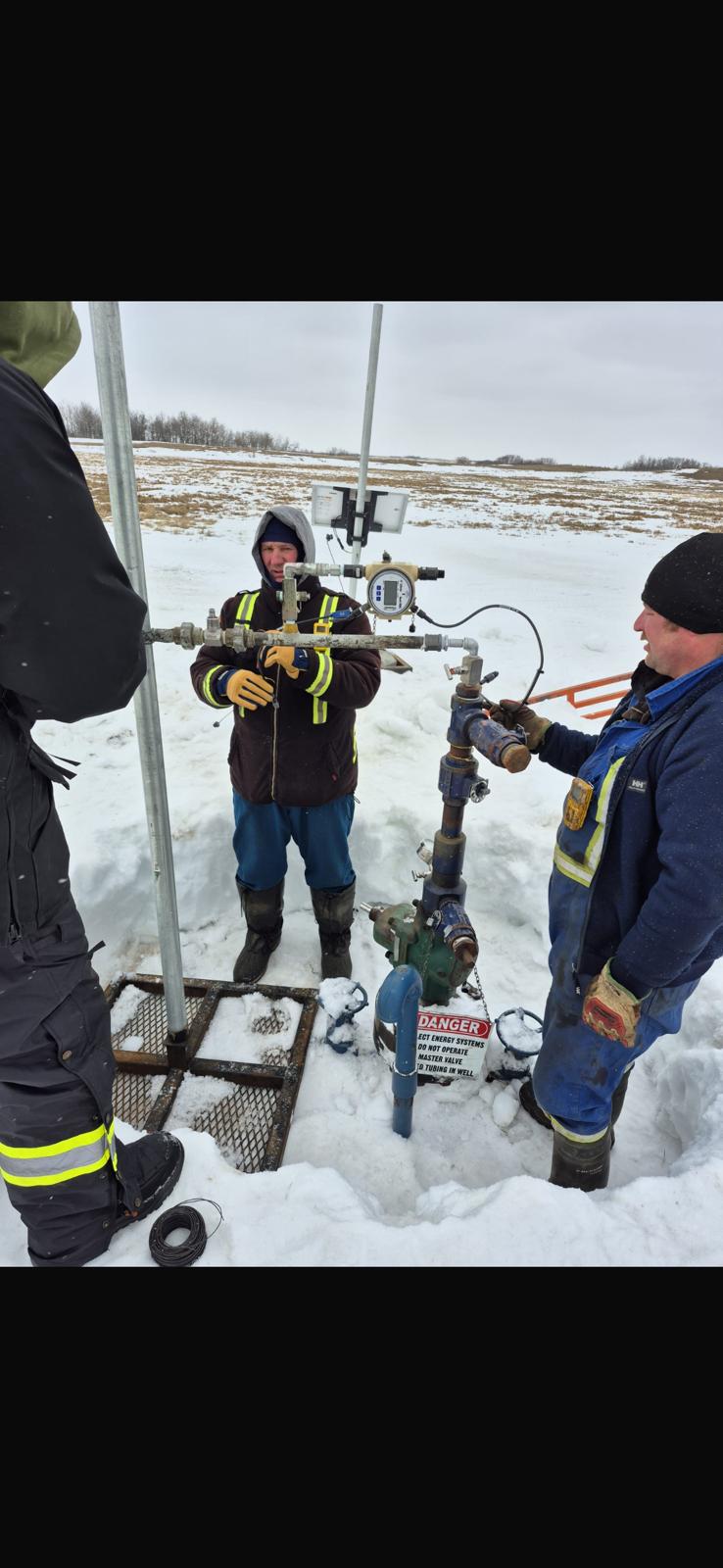
Quantify baseline methane emissions at the wellhead under ISO-aligned protocols, capturing real observed data rather than statistical assumptions.
Eliminate
Permanently eliminate emissions through licensed plug-and-abandonment using flameless cold-cut methods and cement plugs, executed to jurisdictional standards without hot work or confined-space requirements.
Verify
Independent, accredited VVBs confirm measured methane reductions in accordance with ISO 14064-2 and ISO 14064-3 principles.
Issue
Serialized credits issued on recognized carbon registries with full chain-of-custody documentation and lifecycle traceability.
Connect
Credits connect to registry and market infrastructure. The forward-looking Blockchain Framework describes potential future digital distribution and lifecycle tracking.
Integrity & Market Context
Institutional-quality by design. Policy-aligned.
Integrity principles
- Physical permanence. The well is cut, capped, and sealed at the source. No ongoing methane source remains, because there is nothing left to leak.
- Genuine additionality. With no mandatory closure timeline and oversubscribed public funding, these wells would otherwise languish. The intervention is clearly additional.
- Measured, not assumed. Emissions are measured at the wellhead before closure, so quantification reflects what was actually emitting, not a default factor.
- Conservatism. Quantification is calibrated under recognized protocols with conservative assumptions, so credits are defensible over their full life.
- Clear title, no double counting. Each tonne is serialized and issued once on a recognized carbon registry with documented chain of custody, validated by an independent body.
Standards and Policy Alignment
Quantification follows ISO 14064-2 and ISO 14064-3, with independent validation and verification by an accredited validation and verification body (VVB), issuance through recognized carbon registries, and alignment with ICROA. The approach is consistent with Alberta's Mature Asset Strategy, including Recommendation 19 on carbon markets funding closure, Recommendation 13 on joint industry closure, and Area-Based Closure cost reductions of 10 to 40 percent.
On surface casing vent flow (SCVF), the pathway aligns with AER Directive 087 and the legacy Interim Directive ID 2003-01, and references the proposed Category 3 SCVF-destruction pathway under Alberta EPA's draft Quantification Protocol for Vent Gas Reduction (draft per the Alberta EPA stakeholder memorandum, February 27, 2026).
The regulatory backdrop includes Canada's commitment to reduce methane by at least 75 percent, federal regulations finalized December 2025, Canada-Alberta equivalency on a 2035 horizon, removal of the Category 2 crediting deadline, and tightening global rules including the EU Methane Regulation. Methane has roughly 80x the warming impact of carbon dioxide over 20 years and about 30x over 100 years.
Alberta
Over 274,000 inactive and abandoned wells with no mandatory closure timeline. Capital, not regulation, is the binding constraint. Carbon finance closes the gap between obligation and execution.
EU Import Markets
Methane-intensity thresholds on imported crude elevate unmanaged emissions from environmental concern to supply-chain and market-access risk. Permanent elimination offers durable risk reduction.
Market Positioning
Physical permanence, measured outcomes, and independent verification are designed to meet the bar of the highest-integrity channels, from voluntary registries today to compliance frameworks as they emerge.
This pathway has not been approved or endorsed under Alberta's Technology Innovation and Emissions Reduction (TIER) regulation or any federal compliance program. Theaus Carbon is actively exploring compliance pathways alongside voluntary market channels. All claims regarding credit issuance are subject to independent verification and registry approval.
Ecosystem
The methane abatement ecosystem
Key Features
What sets this pathway apart
Measured at the Wellhead
Calibrated methane quantification.
Permanent by Physics
Cut, capped, and sealed at the source; nothing left to leak.
Independent Verification
ISO 14064-2 and 14064-3 aligned assurance.
Registry-Issued and Serialized
Each tonne issued once, with full chain of custody.
Digital Infrastructure
Registry and market access, with a forward-looking framework for future digital lifecycle tracking.
Liability Resolution
Retire obligations without deploying any capex.
AI and Power Generation
Verified credits for gas producers serving AI datacenters.
Project Status
Where we are today
This pathway has been nearly five years in the making. Theaus Carbon is currently in process on more than 20 wells, ensuring all engineering, measurement, and documentation requirements are fully captured to support credit issuance. The first Validation and Verification Body site visit was completed in June 2026, covering wells under our first Project Design Document for 11 wells near Provost, Alberta. That PDD is progressing, and work on a second PDD is underway. Credits are expected to be available in Q3 2026, with verification by Carbon Check and registration through the International Carbon Registry (ICR).
Initial field measurements have been strong and underscore the scale of the abatement opportunity. For context, 1 kg/hour of methane can represent approximately 2,500 tonnes CO₂e per year, meaning even low-flow marginal wells can create material abatement opportunities when permanently retired.
Theaus Carbon has teams in place to execute work on at least 1,000 wells per year, with capacity to expand to several thousand wells annually. The pathway is built to align with Alberta's emerging Category 3 direction for Surface Casing Vent Flow (SCVF) destruction, including credible methane measurement and methodology requirements.
The broader opportunity is significant: Alberta's Mature Asset Strategy identified 274,215 wellbores that are marginal, inactive, or decommissioned, with the AER's estimated closure liability of $30B+ and no mandatory closure timeline. Carbon finance closes the gap between obligation and execution.
This pathway is funded entirely by private capital and carbon revenue, at no cost to the Crown, the Orphan Fund, or the taxpayer.
Theaus brings private capital to a public-scale liability.
Who benefits
Energy producers
A long-dated liability resolved and methane eliminated, with no internal capital required.
Indigenous and local communities
Safer, restored sites and renewed confidence where wells once sat idle.
Municipalities
Reclaimed land returns to productive use and the local tax base.
Surface landowners
Lease obligations settled and disturbed land restored.
The Province
A public-scale liability reduced, at no cost to the Crown or the taxpayer.
The climate
Potent methane permanently eliminated at the source, today.
Every well we close removes an emission, retires a liability, and reclaims the land around it. The carbon asset is one outcome of many.
Ready to explore methane abatement?
Methane abatement is delivered by Theaus Carbon via Theaus CH4 Inc.